7 BEST INDUSTRIAL PARK TREES FOR SUSTAINABLE FACTORY LANDSCAPES
16/06/2026
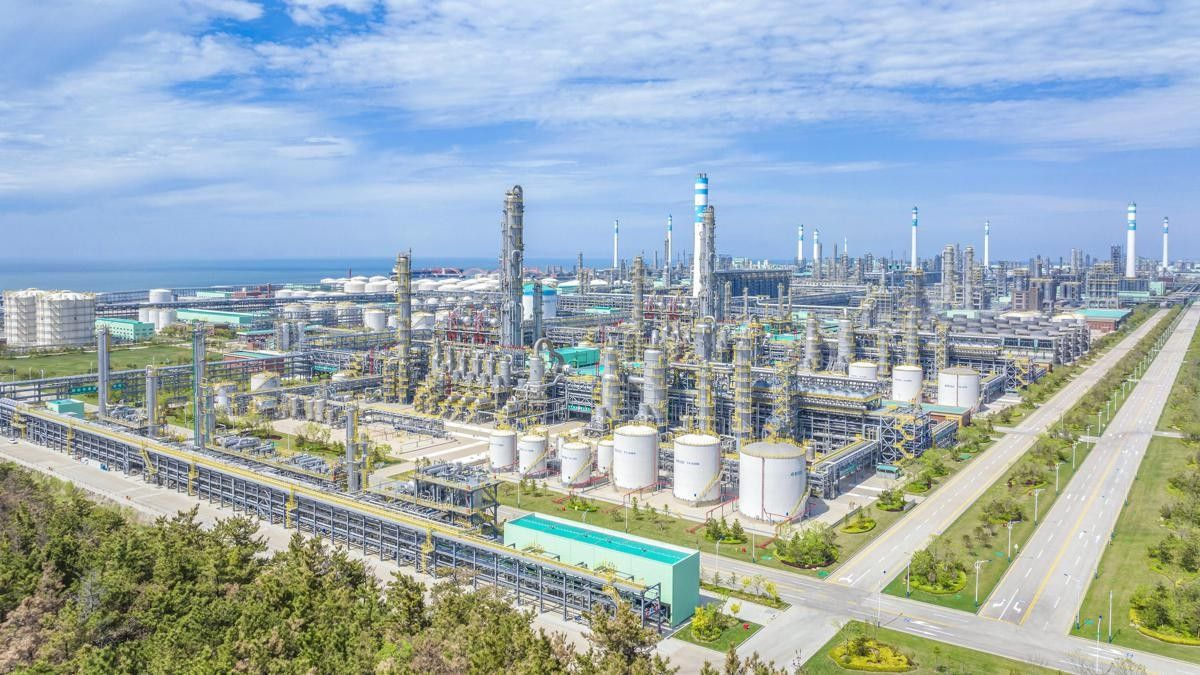
7 Best Industrial Park Trees for Sustainable Factory Landscapes – Sustainable green solutions for manufacturing plants.
In the era of green industrial development and strict environmental standards, selecting the right industrial park trees is no longer just an aesthetic choice. For FDI enterprises, a strategic landscape contributes directly to operational efficiency, ESG (Environmental, Social, and Governance) compliance, and brand reputation.
Core Criteria for Selecting Industrial Park Trees
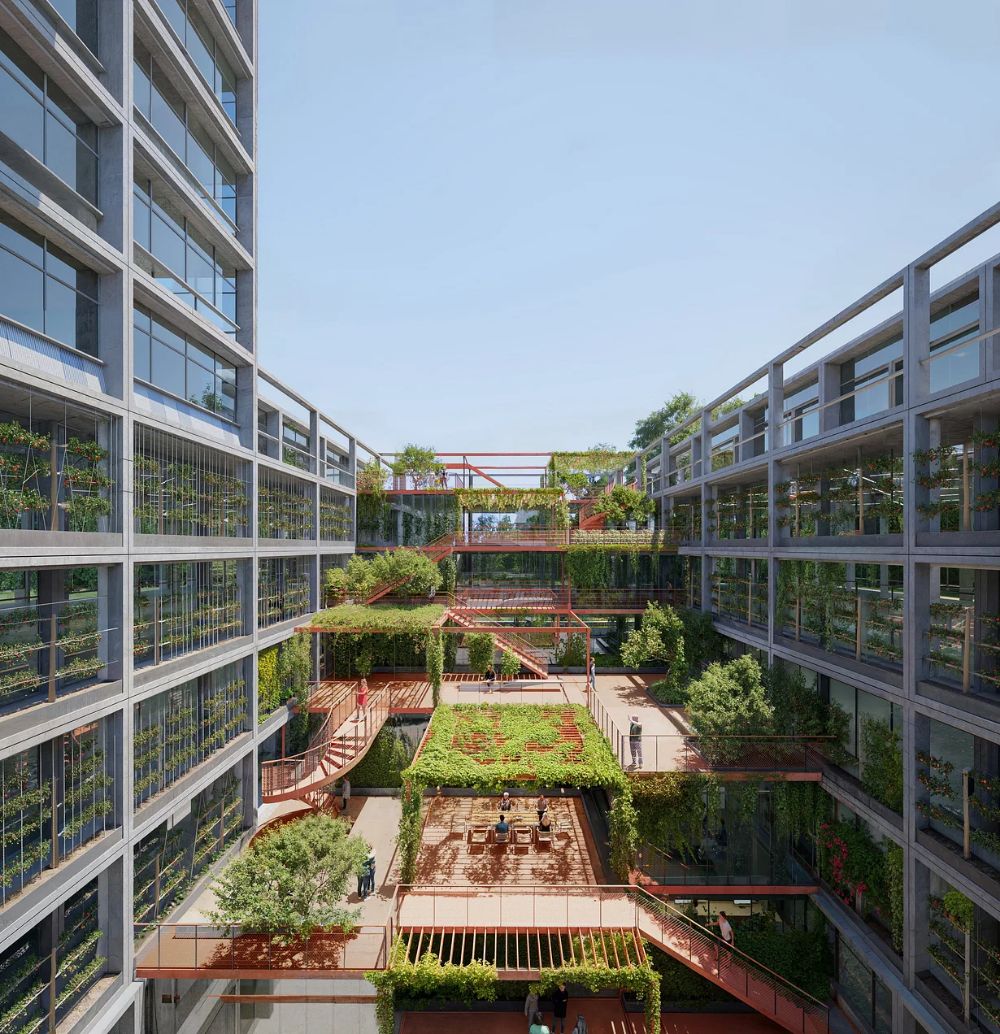
In modern industrial planning, greenery is an integral part of the technical infrastructure. Before choosing specific species, FDI investors and landscape consultants prioritize the following core criteria:
- Resilience: Ability to withstand intense sun, wind, and high-dust environments.
- Root Safety: Deep-growing taproots that do not disrupt underground technical structures or factory foundations.
- Stability: Consistent growth with minimal pests and diseases.
- Cost-Efficiency: Low maintenance requirements to optimize long-term operating budgets.
- Landscape Value: Enhancing the professional image of administrative and production areas.
Top 7 Most Popular Industrial Park Trees
1. Chengal Parir
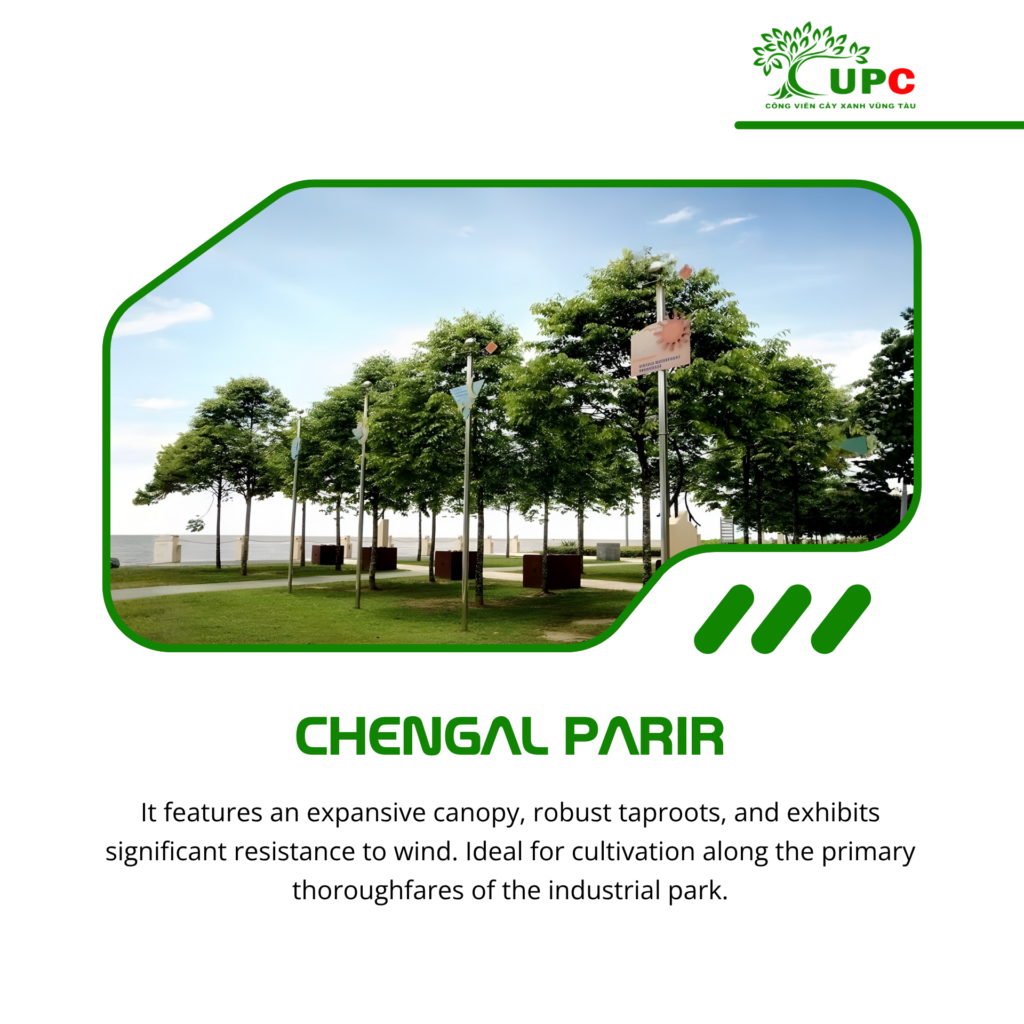
One of the most common industrial park trees in Vietnam, Chengal Parir is prized for its broad canopy, providing excellent shade. Its deep taproots offer great wind resistance, making it ideal for planting along main traffic axes.
2. Keruing Belimbing
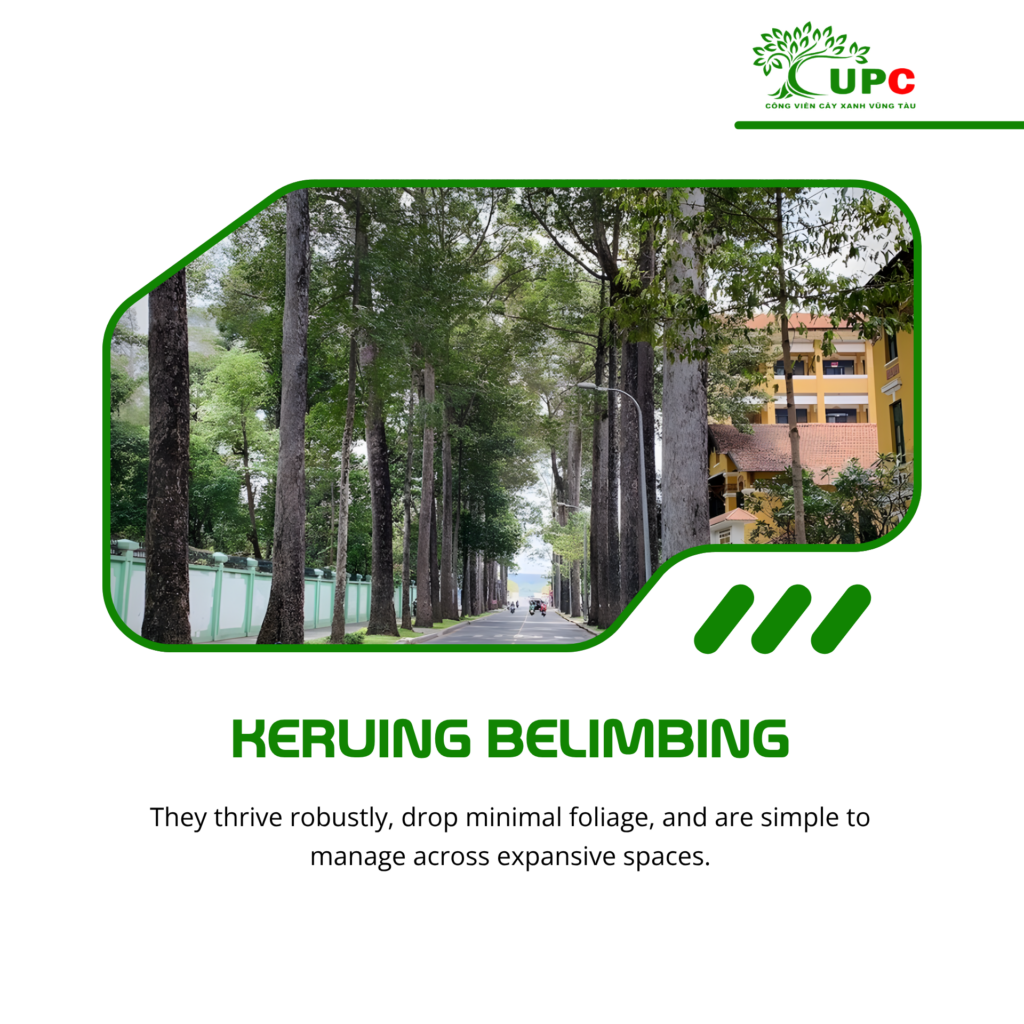
Keruing belimbing is favored for its vigorous growth and adaptability to various soil types. It sheds fewer leaves, simplifying maintenance for large-scale production areas.
3. Pride of India
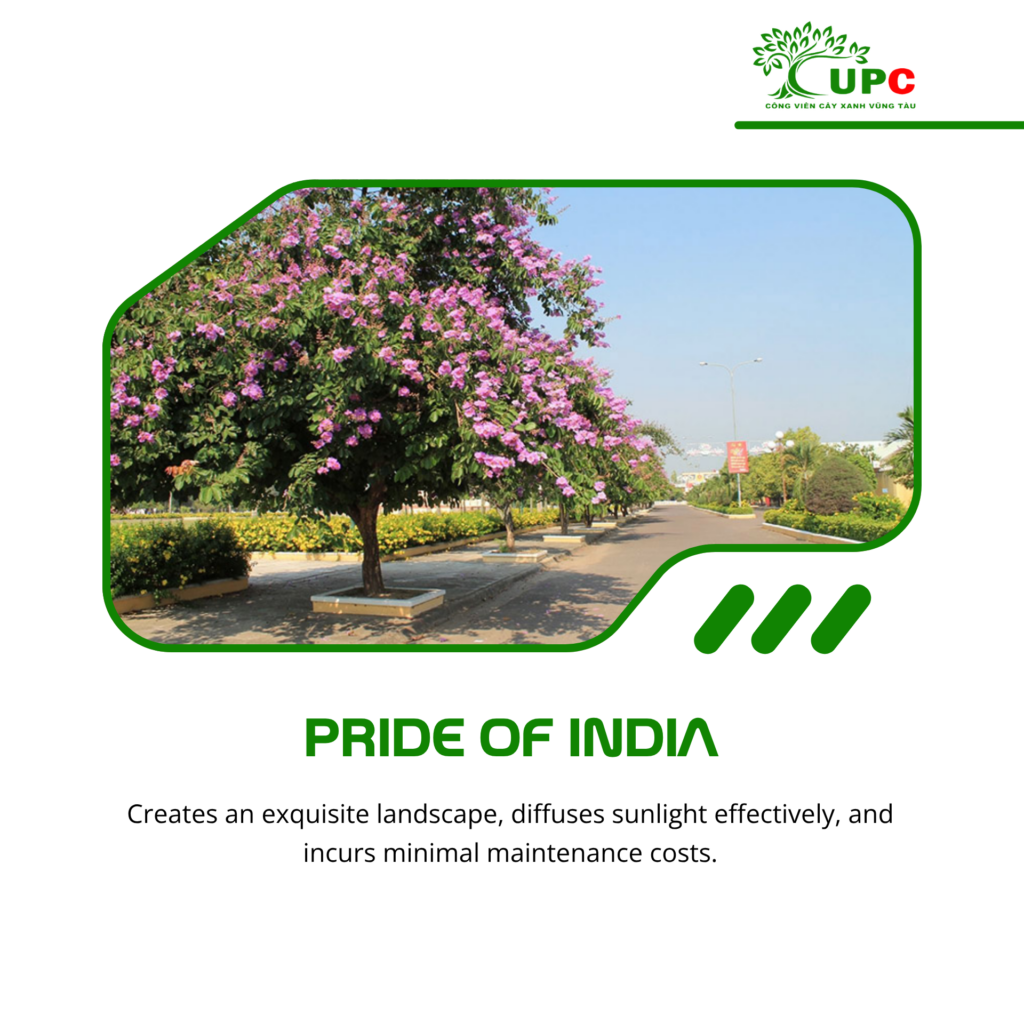
Combining high landscape value with technical standards, this species provides moderate shade and seasonal flowers. It creates a pleasant atmosphere for workers while maintaining reasonable maintenance costs.
4. Yellow Flamboyant
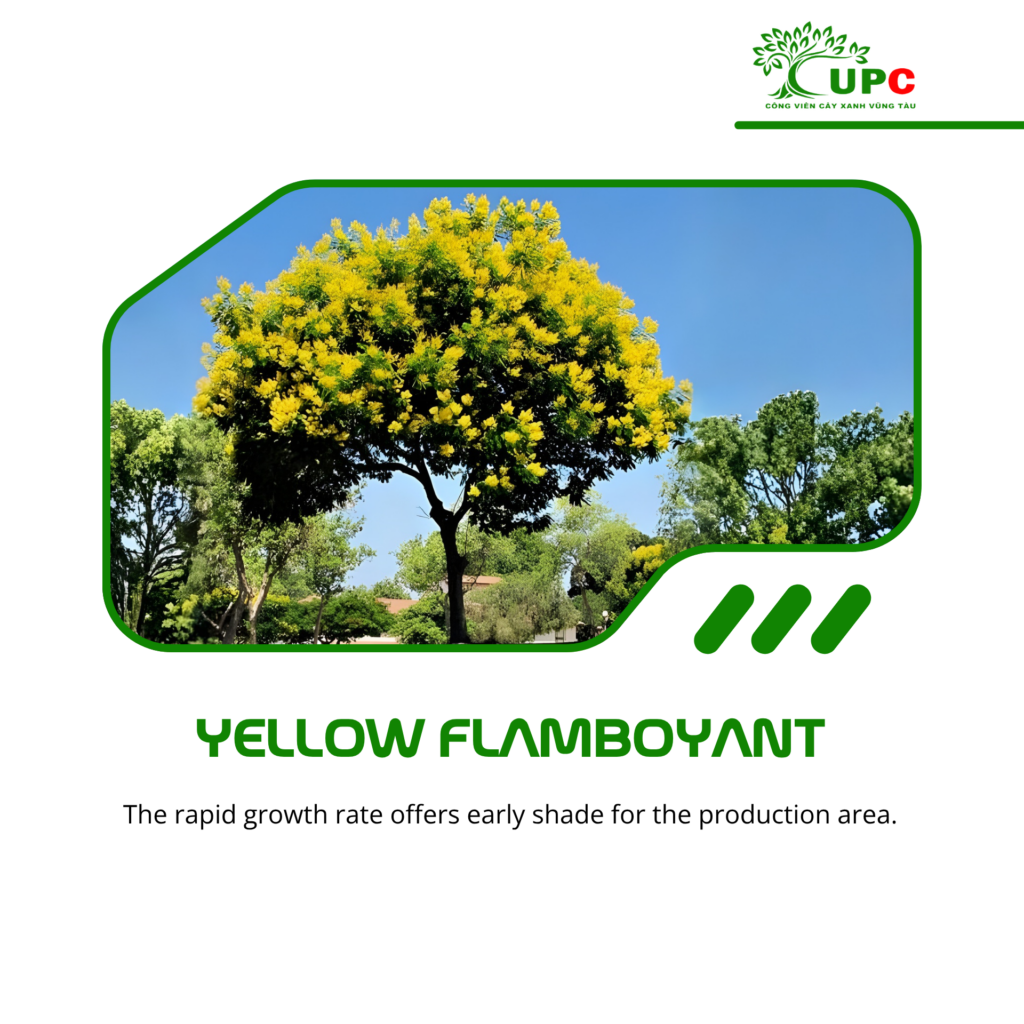
Often selected for newly established industrial parks due to its rapid growth rate, it provides early shade for factory blocks and parking lots.
5. Burma Padauk
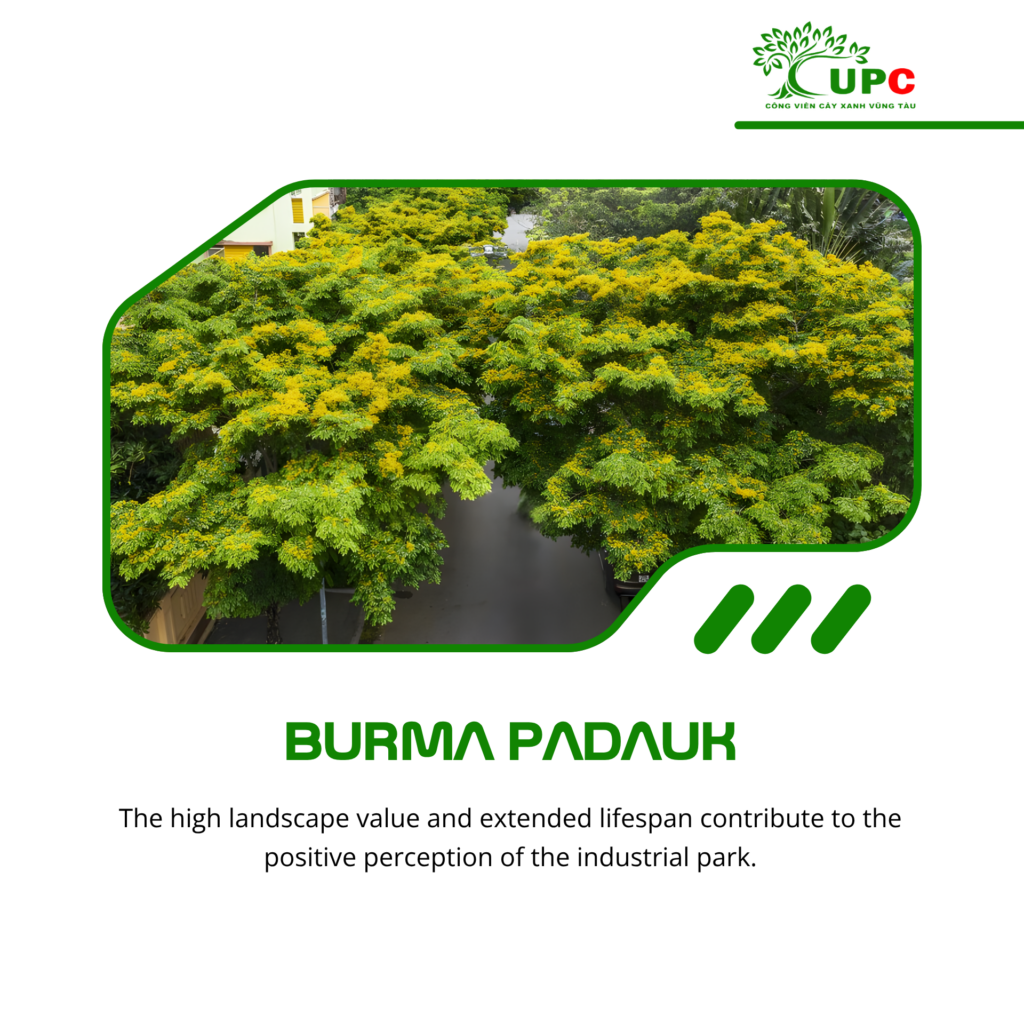
A premium choice for high-end industrial zones focused on branding and longevity. Burma Padauk is typically situated in administrative centers and central boulevards to elevate the industrial park’s image.
6. Golden Shower Tree
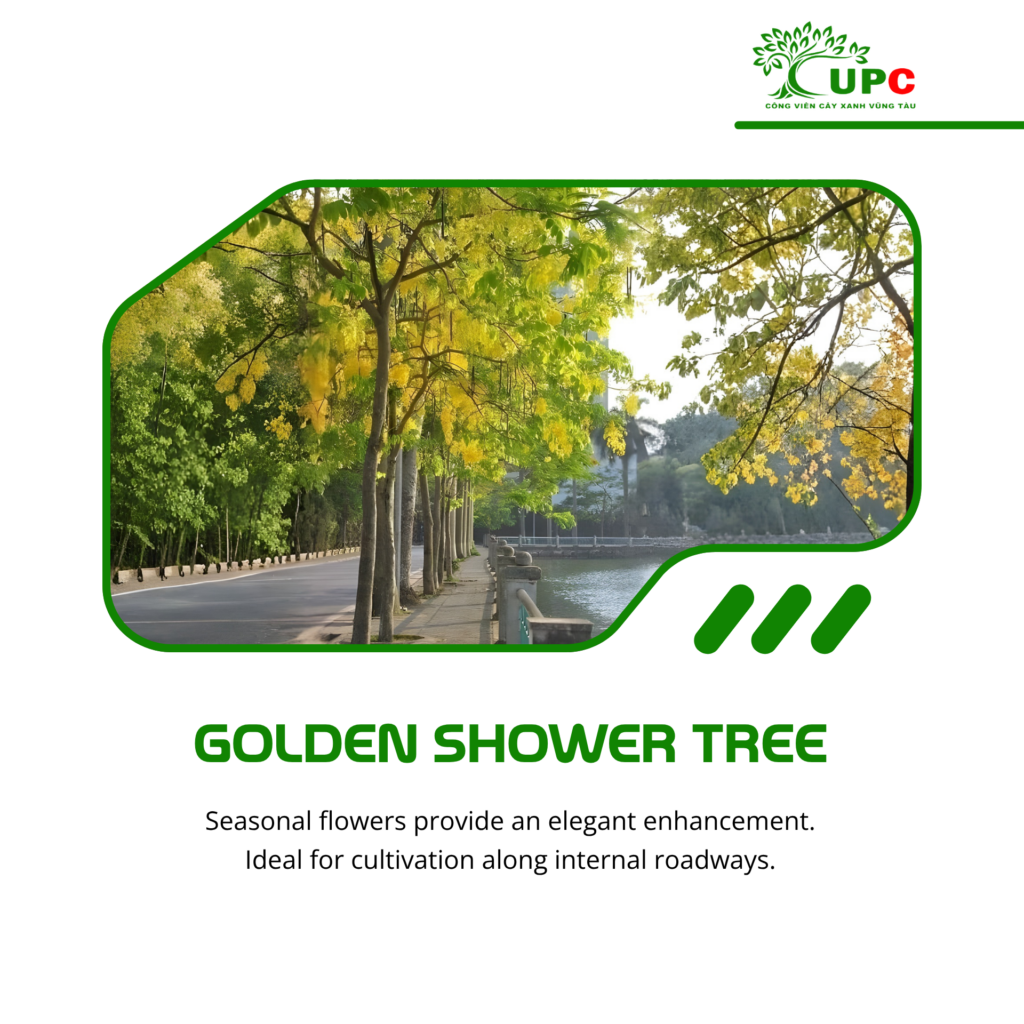
This tree adds a vibrant aesthetic element with its striking yellow flowers. It is highly compatible with internal road networks as its roots have minimal impact on infrastructure.
7. Silver Trumpet Tree
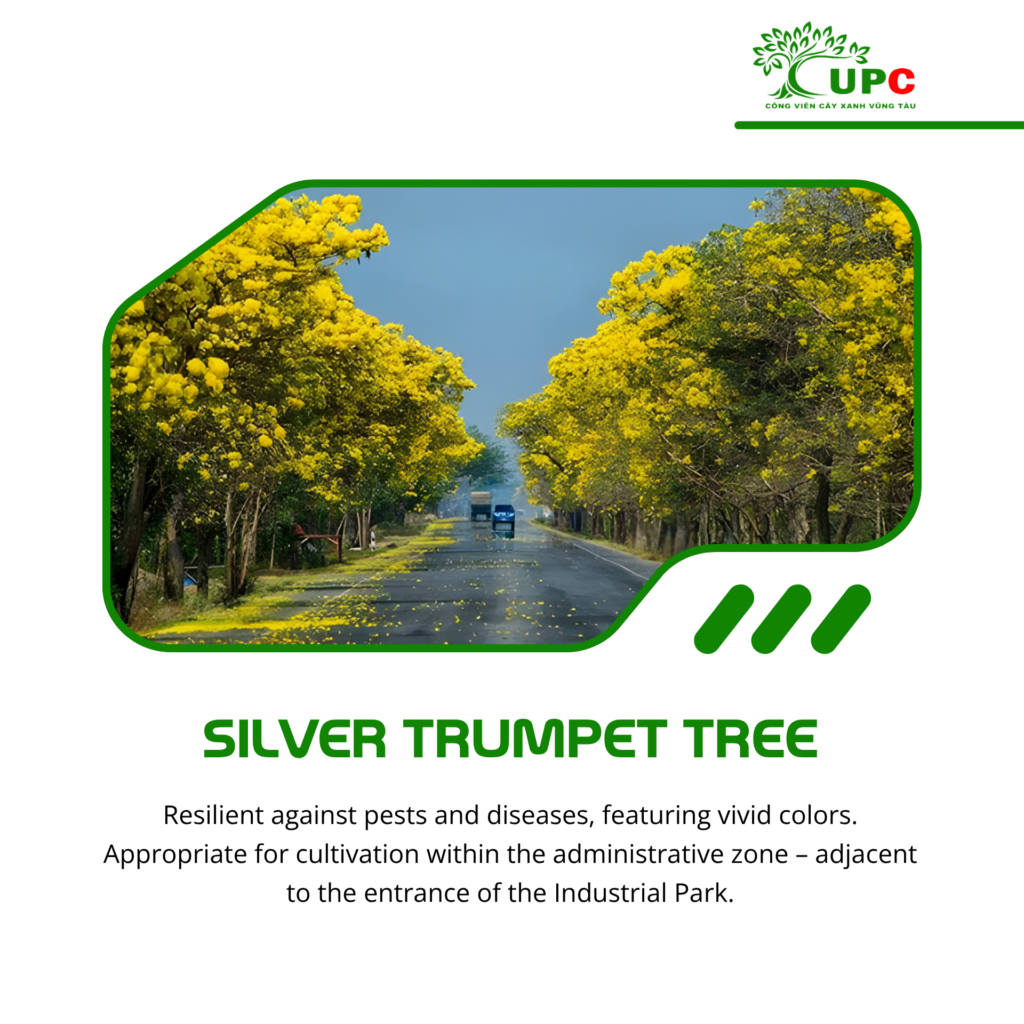
Frequently found near office buildings and main gates, the Silver Trumpet tree is easy to manage, pest-resistant, and visually outstanding, making it a favorite for “first impression” areas.
Key Advantages of Top Industrial Park Trees
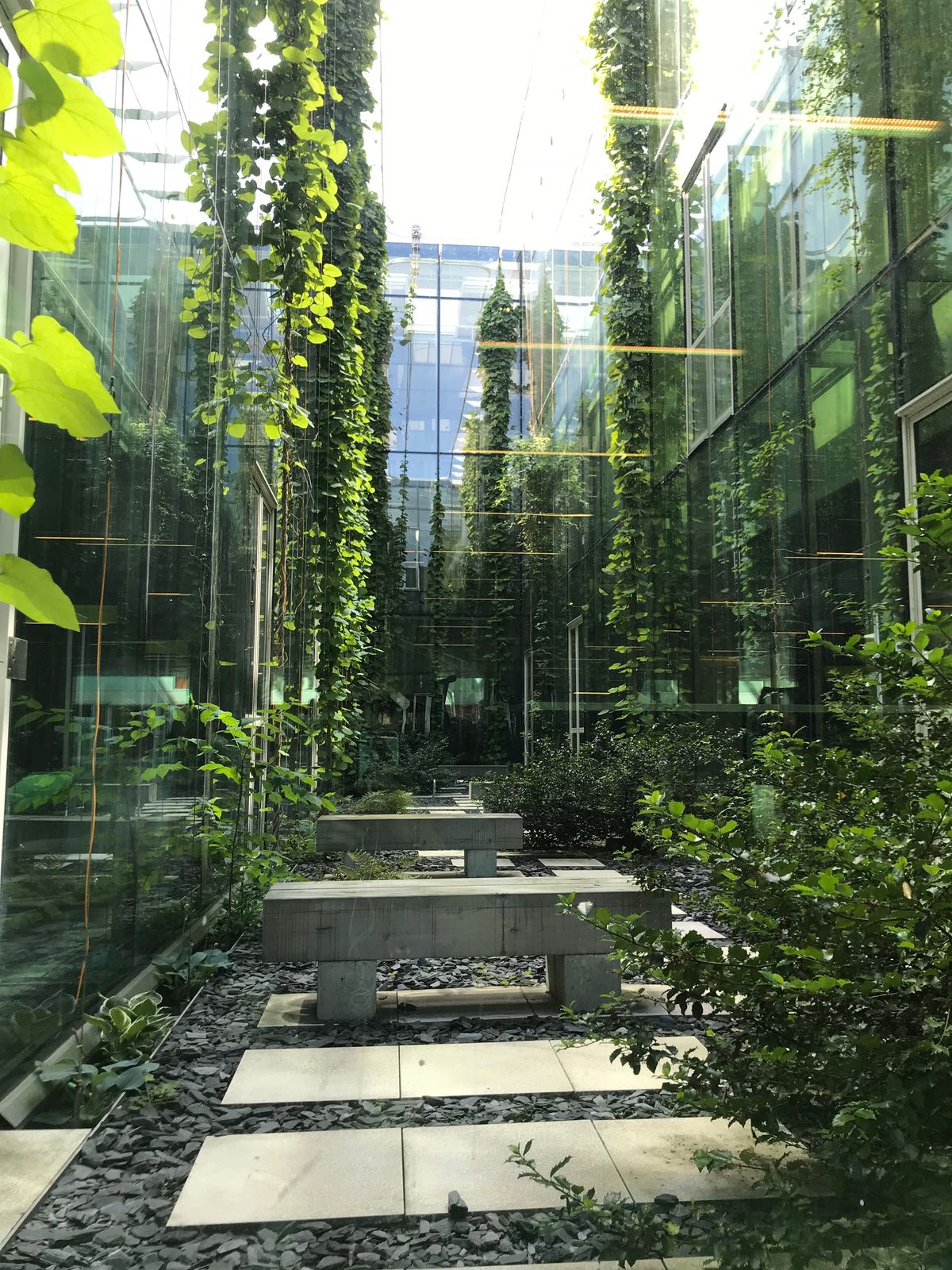
These seven species are the preferred choices in modern green planning because they consistently meet the rigorous demands of the industrial environment:
- Microclimate Regulation: They effectively reduce dust, noise, and heat radiation.
- Operational Optimization: Their easy-care nature ensures a professional look without excessive labor.
- ESG & Environmental Compliance: Well-managed greenery helps factories meet international environmental standards.
However, selecting the right tree is only the first step. Long-term effectiveness depends on expert planning, technical execution, and standardized maintenance.
UPC – Your Professional Industrial Landscape Partner
UPC accompanies investors from the initial consultation and tree selection to the construction and long-term maintenance of industrial greenery according to sustainability standards.
With extensive experience in large-scale FDI projects, UPC does not just build landscapes; we build a green, safe, and efficient future for your factory.
Contact UPC for Sustainable Solutions:
- Hotline: 0919 969 969
- Website: https://upcgreen.com/
- Email: sales@upcgreen.com
- Address: 221 Vo Thi Sau, Vung Tau Ward, Ho Chi Minh City